
The Financial Reality of Cord-Cutting in the United States
For decades, American households had little choice when it came to home television entertainment. Regional cable monopolies (such as Comcast Xfinity, Charter Spectrum, and Cox Communications) or satellite operators (DirecTV and Dish Network) dictated pricing, channel lineups, and contract terms. In 2026, the average American cable bill has skyrocketed past $120 to $180 per month when accounting for mandatory broadcast TV surcharges, regional sports fees, and equipment rental line items.
Faced with mounting subscription fatigue, millions of families across the United States are ditching legacy cable contracts in favor of high-performance Internet Protocol Television. In this comprehensive market analysis, we compare the real financial costs, channel selections, contract terms, and technological flexibility of traditional US cable against Brampton IPTV.
1. The Financial Breakdown: Real Costs Exposed
Cable operators advertise enticing introductory promotional rates (such as "$59.99/mo"), but an inspection of the final monthly bill reveals a starkly different reality once hidden fees are calculated:
Typical US Cable Package (Monthly Breakdown):
- Base Entertainment Tier: $79.99
- Broadcast TV Surcharge (Local Channels): $21.50
- Regional Sports Network (RSN) Fee: $15.75
- HD Technology & DVR Service Fee: $14.00
- Set-Top Box Rental ($9.99 x 3 TVs): $29.97
- Franchise Fees & State Taxes: $12.50
- Total Monthly Cost: $173.71 ($2,084.52 per year!)
Brampton IPTV Annual Subscription:
- Full 35.000+ Channels & 142.000+ VOD: $67.00/year
- All Regional Sports & PPV: $0.00 Included
- DVR Cloud Catch-Up: $0.00 Included
- Hardware Box Rentals: $0.00 (Works on existing TVs & Firesticks)
- Hidden Broadcast Fees & Taxes: $0.00 None
- Total Annual Cost: $67.00 (A savings of $2,017.52 per year!)
2. Channel Selection & Content Variety
Traditional cable subscriptions artificially bundle channels into rigid tiers. If you want a specific sports network or foreign language broadcast, cable companies force you to upgrade to their most expensive premium package.
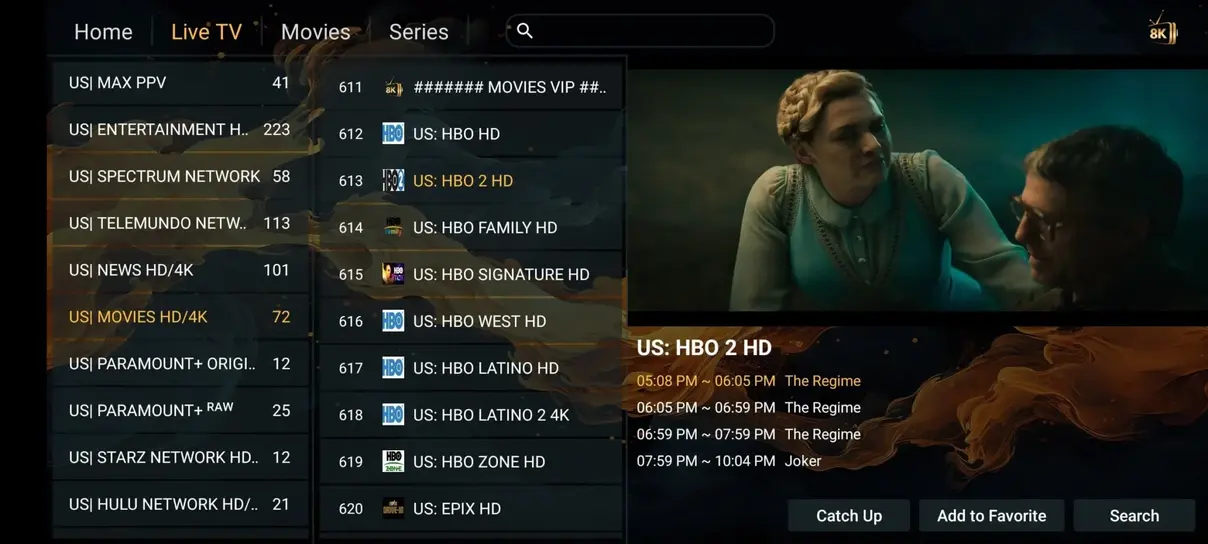
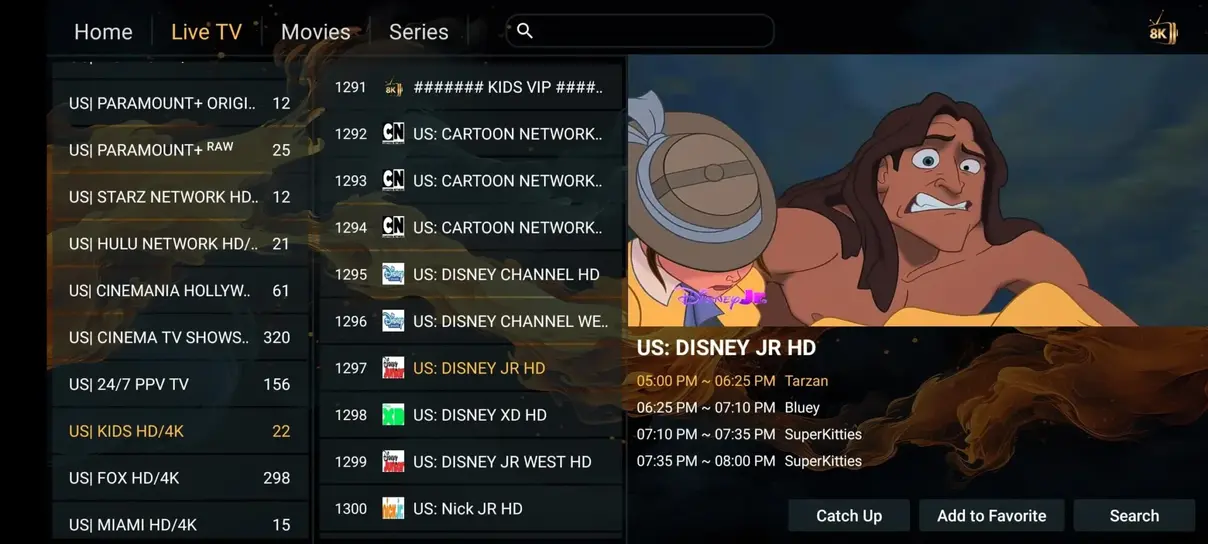
Brampton IPTV adopts the opposite approach: every subscription includes unconstrained access to over 35.000+ live channels covering US national networks, regional sports feeds without local blackout restrictions, European soccer, Formula 1, and international broadcasts from over 60 countries. Furthermore, our integrated VOD library of 142.000+ movies and complete series eliminates the need to subscribe to multiple separate streaming platforms.
3. Hardware Freedom vs. Clunky Cable Boxes
Traditional cable providers force households to rent proprietary, power-hungry set-top boxes for every television in the house. If you move a TV to the patio or want to watch a football game on your laptop while traveling, cable boxes cannot leave your living room.
With Brampton IPTV, your entertainment lives in the cloud. You stream via lightweight applications on Amazon Firesticks, Apple TVs, Smart TVs, iPads, and smartphones. Our multi-screen subscriptions allow your entire family to stream simultaneously from any room or while traveling anywhere in the world with an internet connection. To learn how easily devices connect, review our Step-by-Step Installation Guide.
4. Contracts & Customer Freedom
Cable companies lock consumers into 12-month or 24-month binding contracts with severe early termination penalties of $200 to $400. At Brampton IPTV, there are zero contracts. You choose subscription plans from 1 month to 12 months, backed by an unconditional 7-day money-back guarantee.
Long-Term Financial Impact: The 5-Year Savings Calculation
To truly understand the economic benefits of transitioning from traditional American cable television to Brampton IPTV, examining the cumulative financial impact over a 5-year period reveals dramatic savings that can be redirected toward retirement savings, family vacations, or home improvements:
5-Year Cumulative Cost Comparison:
Traditional US Cable (Average $170/mo + annual 6% rate increases):
Year 1: $2,040 | Year 2: $2,162 | Year 3: $2,292 | Year 4: $2,430 | Year 5: $2,575
Total 5-Year Cable Expense: $11,499.00
Brampton IPTV Annual Subscription ($67/yr locked rate):
Year 1: $67 | Year 2: $67 | Year 3: $67 | Year 4: $67 | Year 5: $67
Total 5-Year IPTV Expense: $335.00
Net 5-Year Household Savings: $11,164.00!
Technological Agility & Cloud Flexibility
Beyond massive cost reductions, the technological disparity between legacy cable and modern IPTV is vast. Traditional cable lines rely on physical copper coaxial infrastructure subject to neighborhood signal degradation, weather interference, and localized physical line cuts. If a storm damages a cable pole, your television goes dark until a technician visits your home.
Brampton IPTV operates on a decentralized cloud CDN architecture. If an international internet route encounters congestion, our automated multi-homed BGP routing shifts traffic to redundant secondary data centers in milliseconds. Furthermore, while cable subscriptions restrict full viewing to your home living room, Brampton IPTV follows you on vacation, business trips, or temporary stays across the globe on your laptop, tablet, or smartphone.
Frequently Asked Questions About Replacing Cable with IPTV
Yes! Brampton IPTV includes local network affiliate feeds (ABC, CBS, NBC, FOX) for major US metropolitan regions, allowing you to follow local morning news, traffic reports, and local sports broadcasts.
No. You keep your high-speed internet connection from your existing provider and simply cancel the television broadcast and set-top box rental portion of your monthly bill.
Join the Cord-Cutting Movement Today
Save over $1,500 every year without sacrificing broadcast quality. Enjoy 35.000+ live channels in 4K resolution with Brampton IPTV.
Environmental Efficiency & Power Savings
An often uncalculated hidden expense of traditional cable is electricity consumption. Multiple legacy set-top boxes running continuous hard drives in your home consume an average of 35 watts each, adding over $50 annually to your residential electricity bill. By contrast, modern streaming sticks and Smart TV apps consume less than 3 to 5 watts during active 4K streaming and virtually zero watts in standby mode, reducing your household carbon footprint while saving energy.